
Hard water and clear glass: keeping shower doors spot-free in metro Detroit
Clear glass is stunning the day it goes in. Around here, the real question is how to keep it that way. Here's what actually works against our hard water.
Why your glass spots so fast around here
If you've lived in Macomb or Oakland County for any length of time, you already know the water is hard. Much of metro Detroit draws from the Great Lakes system, and the dissolved minerals that come with it, mostly calcium and magnesium, are exactly what turn a freshly installed clear shower door cloudy in a matter of weeks.
Here's the mechanism in plain terms. Every time you shower, droplets land on the glass and then evaporate. The water leaves, but the minerals don't. They stay behind as a thin chalky film. Do that twice a day for a month with no upkeep and those individual spots fuse into a permanent-looking haze. Left long enough, the minerals can actually etch into the surface of the glass, and at that point no amount of scrubbing brings the clarity back.
Start with the right glass: low-iron vs. standard clear
People are sometimes surprised that 'clear' glass isn't all the same. Standard clear glass has a faint green tint from its iron content, most visible at the edges and across larger panels. Low-iron glass removes most of that, so what you see is genuinely colorless and bright.
For hard-water purposes the relevant point is this: low-iron glass shows you the truth. When it's clean, it's strikingly clear, and when mineral haze starts building, you notice it sooner and deal with it sooner. It doesn't repel minerals on its own, but pairing low-iron glass with a coating and a squeegee habit gives you the brightest, longest-lasting result. All of our enclosures use 3/8-inch tempered glass, and low-iron is one of the options we'll walk you through in the showroom.
Protective coatings: what they do and don't do
A glass protective coating is a treatment applied to the surface that fills in the microscopic pores in the glass and makes it hydrophobic. In practice that means water beads up and rolls off instead of clinging and evaporating in place. Less standing water means less mineral residue left behind, and the residue that does form wipes away with far less effort.
Two honest caveats. First, a coating is not a force field. It dramatically reduces spotting, but it doesn't eliminate the need to wipe the glass down. Second, coatings wear with use and typically need reapplication over time, how often depends on the product and how heavily the shower gets used. Think of a coating as making the easy habit even easier, not as a license to skip maintenance entirely.
If you'd rather not apply one yourself, ask us about coating options when we measure. It's a small add that pays off most in hard-water homes like ours.
The daily squeegee: the habit that beats everything
This is the unglamorous truth: the most effective tool against hard-water spots costs a few dollars and takes about thirty seconds. A squeegee pulled across the glass right after you shower removes the water before it has a chance to evaporate and deposit minerals. No water sitting on the glass, no spots forming. It really is that direct.
Keep a squeegee mounted inside the enclosure or hung on the door so it's right there, and pull from top to bottom in overlapping strokes. A quick pass on the inside of the door, the fixed panel, and the wall tile while you're at it. Do this consistently and you'll go a remarkably long time before the glass needs anything more than that.
For the occasional deeper clean, a 50/50 mix of distilled white vinegar and water dissolves light mineral buildup, let it sit a minute, then wipe and squeegee dry. Steer clear of abrasive pads and harsh scouring cleaners, especially on coated glass, since they can scratch the surface or strip the coating.
A realistic upkeep routine
You don't need a complicated regimen. Here's what actually keeps clear glass looking new in a hard-water home, in order of how much each step matters.
- Every shower: squeegee the glass dry. This alone does most of the work.
- Weekly: a quick wipe with a soft microfiber cloth and a gentle glass-safe cleaner.
- Monthly-ish: a vinegar-and-water pass on any spots that have started to show.
- Periodically: reapply your protective coating per the product's guidance.
- Avoid: abrasive scrubbers, gritty pads, and harsh acidic or ammonia-heavy cleaners on coated glass.
The takeaway for a metro-Detroit bathroom
Clear glass and hard water can absolutely coexist, you just have to set yourself up for it. Choose quality glass, consider low-iron for the brightest baseline, add a coating to make the daily routine easier, and build the squeegee habit on day one. The homes where clear glass still looks pristine years later are almost always the ones that started with that simple wipe-down habit, not the ones that scrubbed hardest later.
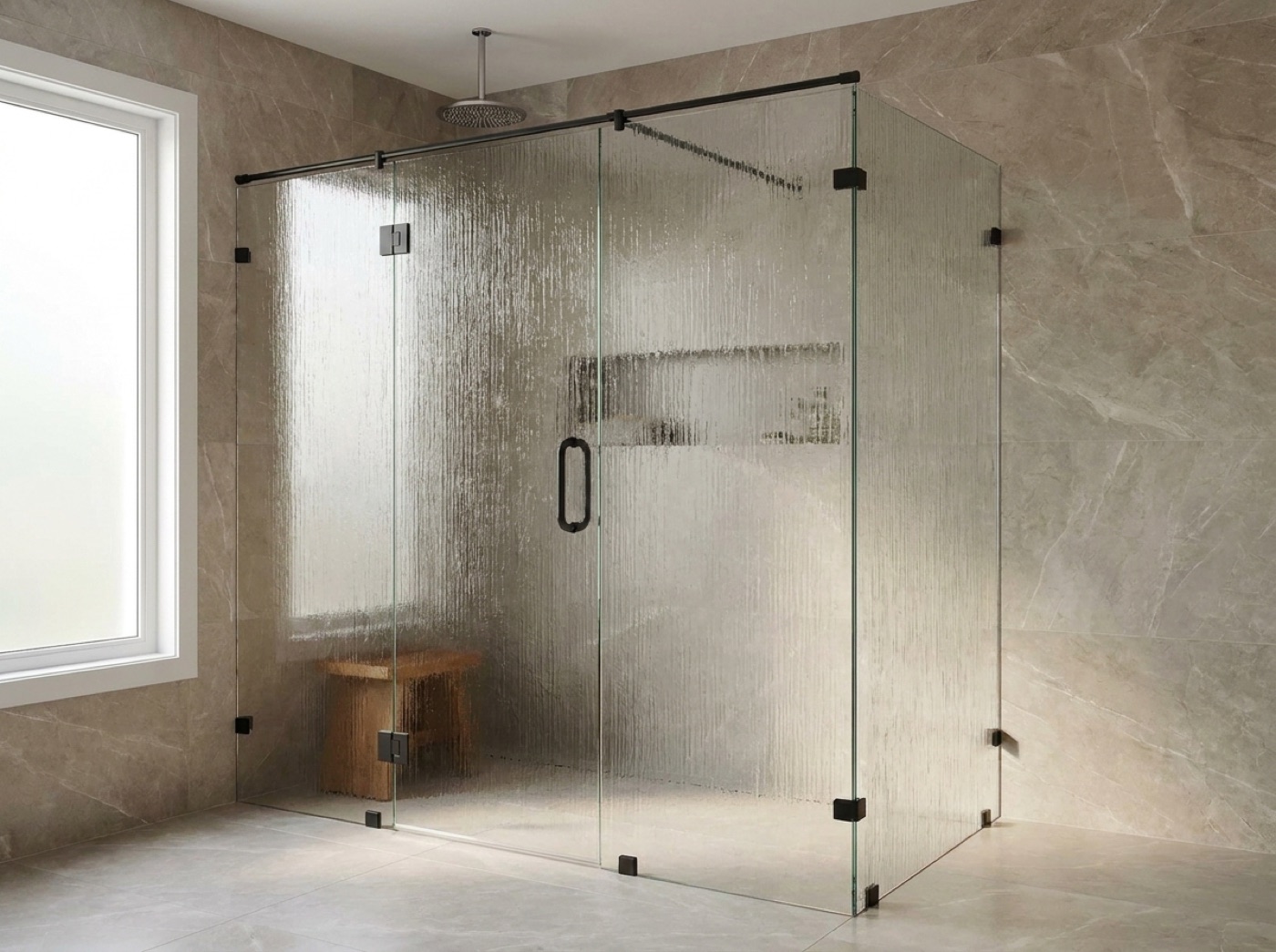
And if you'd rather not fight the mineral battle at all, this is exactly the kind of trade-off we talk through with every customer. Some choose satin frosted or rain-textured glass precisely because spotting is far less visible on a textured surface. There's no single right answer, just the one that fits how you live.
Common questions.
Does low-iron glass prevent water spots?
Not on its own. Low-iron glass is clearer than standard glass because it lacks the green iron tint, but minerals still deposit on any glass when hard water evaporates. What low-iron does is show the truest, brightest result when you keep it clean, and you'll spot haze building sooner. Pair it with a protective coating and a daily squeegee for the best outcome.
How do I get hard-water spots off my shower glass?
For light buildup, spray a 50/50 mix of distilled white vinegar and water, let it sit about a minute, then wipe and squeegee dry. Avoid abrasive pads and harsh scouring cleaners, which can scratch glass or strip a coating. If minerals have etched the surface after months of neglect, cleaning may not fully restore clarity, which is why a daily wipe-down matters so much in metro Detroit.
Is a glass coating worth it with metro-Detroit hard water?
For most homes here, yes. A coating makes water bead and roll off instead of pooling and evaporating, so less mineral residue sticks and what does form wipes away easily. It isn't permanent and doesn't replace the squeegee habit, but in a hard-water area it makes the upkeep noticeably easier. We can apply one when we install your enclosure.
See low-iron, coated, and textured glass side by side
Not sure which glass and finish will hold up best in your bathroom? Come see them in person or get a free quote. The same family measures, fabricates, and installs every enclosure in-house.